Back in 2006 I wanted to learn how to build a website, a good one, and I found a great provider in SiteSell. At tat time, I maximized this engines capabilities to build a site for kids that would benefit from my desire to write and a healthy leaning toward kids and their upbringing.
The site became very popular around the world as it hosted games, writing tips, parenting suggestions and most of all a library of short stories submitted by my young readers. Parents also liked the site because it was kid friendly so moms and dads didn't have to worry about predators, their credit cards, profanity and the like.
I enjoyed writing on the site and publishing the many stories that came in, but after a while, the volume became so high that I shelved the site.
However, today, I am happy to announce that it’s time for my re-launch after 5 years! If your friends have kids from 5 to 15, tell them about Short-Stories-Help-Children.com They'll thank you.
I hope to show you how kids can use the computer as something more than an expensive toy. My young readers have submitted hundreds of interesting tall tales.
I promote writing as a technique that can develop a child's skills, interests and good behaviour. The kids use this as a social network as well, since they can exchange comments about their creativity and imagination.
While promoting positive activities, we can, hopefully, diffuse the many negative influences affecting our children everyday. Whatever the case may be, there should be something here to amuse or intrigue you.
I am asking moms and dads to have a look and leave me a comment to tell me what you think of the site.
Showing posts with label Technology. Show all posts
Showing posts with label Technology. Show all posts
Thursday, March 09, 2017


Sunday, September 23, 2012
Life is a Series of Processes
I am quite sure most of us can attest to this. My youth saw me go through the process of attending school, and seeing it through to university. With that in hand, I started the next process, working in my field, computers and software. My work, with some impressive employers, spanned from 1976 to 1990. Then another phase, or process, self-employment.
I started my business, Compunite Enterprises Inc., with an eye toward "Uniting People with Computers" and, during the 90's, enjoyed the good life. That process changed from building custom database applications and selling PCs, to trying to find stable, long term contracts. The contracts became few and far between and the early 2000's had its ups and downs.
I eventually threw in the towel and went to work for a sweat shop in Etobicoke. That lasted one year, as I left in pain, in need of a hip replacement. This latest process saw us taking a leap and moving to Niagara Falls, where we want to end up... our forever home. After surgery and recovery, I began feeling at home.
The second to last process has been that of trying to find work in the Niagara Region. It would be more likely getting hit by lightening... twice. So I am now entering, what I hope will be, my last process. I am taking part-time jobs while I look for full-time work.
"Process" is key here as my objective is to put into play the many skills I have developed over the years when I routinely identified processes and turned them into automated solutions for my clients. My clients made lots of money on my back, and now I am just looking to get some of that for me.
Please have a good hard look at the web-site. I would be very interested to hear what you think of it.
I started my business, Compunite Enterprises Inc., with an eye toward "Uniting People with Computers" and, during the 90's, enjoyed the good life. That process changed from building custom database applications and selling PCs, to trying to find stable, long term contracts. The contracts became few and far between and the early 2000's had its ups and downs.
I eventually threw in the towel and went to work for a sweat shop in Etobicoke. That lasted one year, as I left in pain, in need of a hip replacement. This latest process saw us taking a leap and moving to Niagara Falls, where we want to end up... our forever home. After surgery and recovery, I began feeling at home.
The second to last process has been that of trying to find work in the Niagara Region. It would be more likely getting hit by lightening... twice. So I am now entering, what I hope will be, my last process. I am taking part-time jobs while I look for full-time work.
"Process" is key here as my objective is to put into play the many skills I have developed over the years when I routinely identified processes and turned them into automated solutions for my clients. My clients made lots of money on my back, and now I am just looking to get some of that for me.
Please have a good hard look at the web-site. I would be very interested to hear what you think of it.
Saturday, October 29, 2011
Thou shalt covet thy neighbour's tablet
One of my predictions for 2015 is that the Personal Computer (PC) will be phased out in lieue of the Commodity Computer (CC) and Tablet. It's the Personal aspect that is being minimized. The evolution comes on the edge of multiple fronts. One, miniaturization, it's always around us, and enables the construction of better portable devices. Two, the Cloud, enabling all of us to store that which makes our computing personal, in the Cloud rather than on a hard disk. And three, the time and frenzy factor. Who has the time or will have the time to personalize their computing environment to the extent that we did in the past.
With hard disks going away and being replaced by flash drives, the amount of personalization may be virtually nil. The desktop computer will become nothing more than a commodity, hence 'CC', and the tablet will be as swappable as a GPS device, which is experiencing a hefty number of thefts these days.
As computing migrates more and more to the Cloud, the computers that were once so valuable to our personal endeavours will become throw-aways. Tablets will not be the neat new "gotta have one" gadget, but a "where are my car keys and tablet" common necessity.
Consequently, the tablet will look even more attractive to thieves because of its universality. Aside from the nuances of Apple versus the rest of the world, the tablets will be up and running in someone else's hands within seconds. They won't even be locked like smart phones. Just like in the movies, tablets will be a portable window to the Internet and little more.
For you see, there will be little need to pour more and more power into the little devices as was done with smart-phones. The Internet has caught up and the Cloud is ready. Tablets and Smart-phones will be dumbed-down and become very very inexpensive, aside from the progress usually attributed to time and technology. The quantum leaps forward, in this regard, will actually appear to be backward. Look behind you to see what's coming.
With hard disks going away and being replaced by flash drives, the amount of personalization may be virtually nil. The desktop computer will become nothing more than a commodity, hence 'CC', and the tablet will be as swappable as a GPS device, which is experiencing a hefty number of thefts these days.
As computing migrates more and more to the Cloud, the computers that were once so valuable to our personal endeavours will become throw-aways. Tablets will not be the neat new "gotta have one" gadget, but a "where are my car keys and tablet" common necessity.
Consequently, the tablet will look even more attractive to thieves because of its universality. Aside from the nuances of Apple versus the rest of the world, the tablets will be up and running in someone else's hands within seconds. They won't even be locked like smart phones. Just like in the movies, tablets will be a portable window to the Internet and little more.
For you see, there will be little need to pour more and more power into the little devices as was done with smart-phones. The Internet has caught up and the Cloud is ready. Tablets and Smart-phones will be dumbed-down and become very very inexpensive, aside from the progress usually attributed to time and technology. The quantum leaps forward, in this regard, will actually appear to be backward. Look behind you to see what's coming.
Monday, October 24, 2011
Where will computing go from here?
Have you ever considered, or are you even old enough to care, where computing has been and where it is headed? A loaded question? You betcha!
I come from a generation that grew up with the first computers. No, not PCs. They didn't exist yet. Some of the first computers, just being built when I was a kid, could fill your garage. Typically, in the early days, there was no way to communicate with it or load programs without using toggle switches or other devices like mag tape or punch card readers. All foreign concepts to the current generations.
Eventually something called dumb terminals came to be and these screen-keyboard combos started a rapport with the operating system of the main computer, some might say the 'mainframe'. Simple ASCII character string communications travelled over RS-232 cables to a switchbox near the mainframe. These evolved somewhat and served industry, especially the big banks, quite well.
Huge companies like IBM and CDC and Honeywell built monolithic mainframes and competed for banking and research dollars. Other vendors like Digital Equipment, Tandem, Hewlett Packard and more sprouted up with things called mini-computers.These were the results of advancements in miniaturization and the basic word size with processors and the assembly languages inherent in them. Still the dumb terminals remained.
Suddenly Personal Computers came onto the market aided by an operating system inventor by the name of Bill Gates who devised MS-DOS. About the same time the RS-232 cabling was replaced by Local Area Networks coined with the name Ethernet. Speeds increased and computers were sharing information among themselves, but something centralized was called for. The mainframes gave way, in certain instances, to smaller servers (of information). Even still the servers could also communicate with a mainframe if necessary.
OK, we'll jump ahead a bit, I'm bored too. It's the evolution of the PC that is critical in this discussion. 'Personal' means that local disk storage could help someone personalize their workstation. Give it a look and feel, a number of specialized programs, and even some secrets. Then we got the notebook. Now the individuals could be mobile, and bring their personalizations with them. A new problem arose. We use the desktop for some tasks but the portable/notebook for others. Sharing via the newly popular Internet seemed a likely solution.
Introduce the cel phone. First fairly dumb, it was a phone, after all. Later, it could be personalized, just like a PC. Today these personal smart devices, in so far as they can be carried on one's person, are very powerful, but not in the same way as the PC. The PC gained its power characteristic from having a massive harddrive. Why is this not happening with the smart-phones and tablets of today?
Enter The Cloud. What appears today to be the ultimate personal computing device e.g. smart-phone/tablet will soon be 'dumbed' down dramatically. It will become nothing more that a portal to The Cloud. Everyone will store their information there. The devices themselves will no longer be personal. They will be expendable and replaceable. Don't spend too much on the smartset device. It won't be the smartset thing you do.
The dumb-phones and tablets of the future will be nothing more that conduits to The Cloud! Think ahead.
I come from a generation that grew up with the first computers. No, not PCs. They didn't exist yet. Some of the first computers, just being built when I was a kid, could fill your garage. Typically, in the early days, there was no way to communicate with it or load programs without using toggle switches or other devices like mag tape or punch card readers. All foreign concepts to the current generations.
Eventually something called dumb terminals came to be and these screen-keyboard combos started a rapport with the operating system of the main computer, some might say the 'mainframe'. Simple ASCII character string communications travelled over RS-232 cables to a switchbox near the mainframe. These evolved somewhat and served industry, especially the big banks, quite well.
Huge companies like IBM and CDC and Honeywell built monolithic mainframes and competed for banking and research dollars. Other vendors like Digital Equipment, Tandem, Hewlett Packard and more sprouted up with things called mini-computers.These were the results of advancements in miniaturization and the basic word size with processors and the assembly languages inherent in them. Still the dumb terminals remained.
Suddenly Personal Computers came onto the market aided by an operating system inventor by the name of Bill Gates who devised MS-DOS. About the same time the RS-232 cabling was replaced by Local Area Networks coined with the name Ethernet. Speeds increased and computers were sharing information among themselves, but something centralized was called for. The mainframes gave way, in certain instances, to smaller servers (of information). Even still the servers could also communicate with a mainframe if necessary.
OK, we'll jump ahead a bit, I'm bored too. It's the evolution of the PC that is critical in this discussion. 'Personal' means that local disk storage could help someone personalize their workstation. Give it a look and feel, a number of specialized programs, and even some secrets. Then we got the notebook. Now the individuals could be mobile, and bring their personalizations with them. A new problem arose. We use the desktop for some tasks but the portable/notebook for others. Sharing via the newly popular Internet seemed a likely solution.
Introduce the cel phone. First fairly dumb, it was a phone, after all. Later, it could be personalized, just like a PC. Today these personal smart devices, in so far as they can be carried on one's person, are very powerful, but not in the same way as the PC. The PC gained its power characteristic from having a massive harddrive. Why is this not happening with the smart-phones and tablets of today?
Enter The Cloud. What appears today to be the ultimate personal computing device e.g. smart-phone/tablet will soon be 'dumbed' down dramatically. It will become nothing more that a portal to The Cloud. Everyone will store their information there. The devices themselves will no longer be personal. They will be expendable and replaceable. Don't spend too much on the smartset device. It won't be the smartset thing you do.
The dumb-phones and tablets of the future will be nothing more that conduits to The Cloud! Think ahead.
Data on a Cloud
I recently had the opportunity to investigate the notion of developing a custom database application that could reside off company premises. Typically, there are three general classes involved with servers. First, what most company executives know, is to have your IT staff install a software package on your in-house server. The second is to rent space on a server in some server farm. Here you specify the operating system and the supporting layers of software, even before installing a database package. The third form is to find it already existing on some huge server farm that you may not be able to identfy... a.k.a. The Cloud.
Doing something as complex as defining a database still requires someone with Relational DataBase (RDB) know-how, a.k.a. me, but the savings and expertise required for the server and LAMP layering is reduced to $zero$. Lamp? That's Linux, Apache, MySQL, and Perl. A very common bundling of software to enable a web server and the software that sits in it such as SaaS (Software as a Service). Other acronyms exist such as PaaS, DaaS, DBaaS but we'll keeps things simple for today.
Anyway... the long and short of it is that computing in the cloud (Cloud Computing) is very economical, and its benefits in comparison to having one's own IT department have been validated many times over. I even have such a spreadsheet if anyone needs it. These packages typically charge a low fee by the month, often by user. Some have additional charges depending upon your need for additional features and disk space. Now, with these SaaS applications, I am not referring to the sharing of pictures or movies and the flashy commercials you see on TV. Though those, and Gmail and Live and Office 365 do constitute the cloud, they keep people from the real truth.
There are hundreds, if not thousands, of SaaS applications worldwide and they do a myriad of weird and wonderful things. Virtually anything one could thing of. One references I use in searching for SaaS apps is www.GetApp.com.
Back to my database dilemma though. My search for a database engine in the cloud led me to a very capable product called Caspio Bridge. It's subscription cost was based on a per-application basis as opposed to the more pricey per-user model, so it suited our needs better. If this price model suits you as well, I have already weeded out the competition for you, so have yourself a good look. There are a host of videos that will give you the idea.
Sunday, October 23, 2011
What will some people do for 5 bucks
I found this awesome site called Fiverr.com. It offers the chance for anyone to state what they will do for 5 bucks, and the seller must do it within a chosen timeframe. Buyers, or potential ones, are able to browse countless wild-ass offerings and have a good laugh in the process. It is quite entertaining.
The offers do seem to fall into a few distinct categories that I have become familiar with. First, there are a ton of 'gigs' as they are called, that involve YouTube. These often involve getting some idea or product promoted. Next, there are a great many gigs involving what they call advertizing, but this could mean writing something on one's stomach and parading around town. Then many writing gigs or even proofing, also advice, and still much more.
The last, however, is SEO aka how to promote your web-site. SEO actually stands for Search Engine Optimization, and is the discipline of how to do everything one can with a web-site in order to win Google over. Winning Google over means advancing the web-sites PageRank, thereby moving the site's position closer to the top of page one on the Search Engine Results Pages (SERP).
Buyer beware. Most people young enough to latch onto something like Fiverr may not be aware of the history surrounding the .COM days. In earlier times, when Google was building its strength. companies and individuals were starting up web-sites in a flurry and trying desparately to get them noticed. It was known at the time that Google responded well to having many other sites linking (backlinking) to yours, so they solicited firms to do this in the thousands. Not good. Google isn't Google for nothing. They soon put the brakes on that practice and initiated, unofficially, the 'sandbox'. That's where new website 'play' for a while, building links 'organically', until they grow into bonified, worthy web-sites.
Google is our gig daddy, and you won't get the keys to the car unless daddy says it's OK. So, to make a long story short, as you search for web-site gadgets such as Fiverr, which I love, don't get me wrong, be cautious. Google will not stand for 'budinskis'.
Friday, February 29, 2008
Google me this Batman!
Wow! You know you've hit it big when your company name makes it into the dictionary and then gets turned into a verb. This happened twice in 2006 and there need not be any end to the ways Google will impact our lives.
 And Google is all about impact! With stock prices again nearing the $500 mark Google has exploded in a mere 12 years. Its history has included several alliances and many conflicts, but it remains the strongest of the search engines garnering, at a peak in 2004, results for 85% of all searching on the Internet.
Try to imagine, if you will, several dozen if not hundreds of large data centres scattered around the world all linked and juggling the searching and advertizing needs of millions upon millions of people. The immense complexity and obvious performance kudos related to this is staggering. Goggle is something we have come to rely on. It never fails us. It always gives us what we are looking for, and often a bit more.
For webmasters, it also has many closely guarded secrets. Many techniques that must be mastered in order to have your web site show up on page 1 of a search result. In many cases, small companies hire graphics designers to create flashy, animated web sites. They end up looking great, but graphic designers are specialists at making stuff look great. Don't ask them to get your web site on page 1 of a Google search. It won't happen.
 Luckily, I, and a happy collection of web site owners, have used a tried and true method to build our web sites. This service takes all of the guess work out of doing Search Engine Optimization, and in the process, hosts our sites and even registers the domains for us. The real trick is traffic, and lots of it. How would you like to get 50,000 page views a month, each and every month? My one year old site does! Would that kind of traffic bring you more business?
You can read a little about my experience on my About page. However, if you would like to learn more for yourself about the powerful service we use, have a look at Site Build It. With this facility I just follow the bouncing ball and concentrate on the site content itself. The rest is taken care of. The search engines are tickled, I get reminders as needed, I see my stats and progress for my keywords... the works. This and much, much more is all included, and it's all for a fraction of the value delivered. No joke! And there is a 100% money-back guarantee!
The point is that with the help of Site Build It and its associated services, I can build something that is entrenched in the Google search world. I know how to keep Google happy now, and I can dream of more sites to come.
Google is the search king on our planet, and you can be one of those people that know how to make it find you.
 And Google is all about impact! With stock prices again nearing the $500 mark Google has exploded in a mere 12 years. Its history has included several alliances and many conflicts, but it remains the strongest of the search engines garnering, at a peak in 2004, results for 85% of all searching on the Internet.
Try to imagine, if you will, several dozen if not hundreds of large data centres scattered around the world all linked and juggling the searching and advertizing needs of millions upon millions of people. The immense complexity and obvious performance kudos related to this is staggering. Goggle is something we have come to rely on. It never fails us. It always gives us what we are looking for, and often a bit more.
For webmasters, it also has many closely guarded secrets. Many techniques that must be mastered in order to have your web site show up on page 1 of a search result. In many cases, small companies hire graphics designers to create flashy, animated web sites. They end up looking great, but graphic designers are specialists at making stuff look great. Don't ask them to get your web site on page 1 of a Google search. It won't happen.
 Luckily, I, and a happy collection of web site owners, have used a tried and true method to build our web sites. This service takes all of the guess work out of doing Search Engine Optimization, and in the process, hosts our sites and even registers the domains for us. The real trick is traffic, and lots of it. How would you like to get 50,000 page views a month, each and every month? My one year old site does! Would that kind of traffic bring you more business?
 You can read a little about my experience on my About page. However, if you would like to learn more for yourself about the powerful service we use, have a look at Site Build It. With this facility I just follow the bouncing ball and concentrate on the site content itself. The rest is taken care of. The search engines are tickled, I get reminders as needed, I see my stats and progress for my keywords... the works. This and much, much more is all included, and it's all for a fraction of the value delivered. No joke! And there is a 100% money-back guarantee!
The point is that with the help of Site Build It and its associated services, I can build something that is entrenched in the Google search world. I know how to keep Google happy now, and I can dream of more sites to come.
Google is the search king on our planet, and you can be one of those people that know how to make it find you.
Sunday, February 24, 2008
A Dangerous Lack of Tolerance
It never fails to amaze me, and disturb me, how so many people take their existence for granted. They believe they have some divine right to be here and that explains a lot of behaviour. On one hand those who believe themselves to be special, treat others badly, and on the other hand, other special individuals treat people well as either some form of payback, or perhaps because our journey is brief and it is good to help others along the way.
For my purposes, the ignorant ones who treat people well are at least contributing to society. My beef is with the ignorant ones who don’t.
Why are they both ignorant? Many people, in my estimation, are, because much of it has to do with science... knowing stuff. By the way, ignorant is not a bad word. The tolerance of which I speak is not to do with race, religion or sexual preference, instead, it is of forces around us that have manipulated not who, but what we are.
I would like to begin by briefly drawing your attention to the “Peak Oil” crisis. In summary, oil discovery, the identification of the world’s oil deposits, has already peaked with estimates that some 95% have been located. And oil production will soon peak if it hasn’t already. There will be a declining surplus of oil to be refined from here on.
 To look at the ramifications of a sudden drop in availability, one can use the analogy of water in the human body. It has been said that our bodies are about 85% water, give or take... the exact number is not the point. The point is that if people lose only about 5% of the water in their bodies, they become severely dehydrated, can go into shock and die. We do not need to lose all of our water before we ‘run out of gas’. This is a very fine line so to speak. A very small tolerance.
When the supply of oil needed to run our industries, power our cars, manufacture our plastics and much more, drops by some, as yet, unknown small percentage, the heavily industrialized nations of the world will go into shock! The flow doesn’t have to be cut off... only diminished slightly. The effects on our well-being, daily lives and social values will be staggering. The attention paid to this tolerance point of oil discovery versus oil production as it approached was terribly lacking.
It follows for me, therefore, that when I see people go about their lives thinking that they are here because they are special, I ponder the many other tolerances we have squeezed through just to exist. We aren’t special, we’re just leftovers. We are the only beings left around that happen to be able to function amid a myriad of narrowing physical tolerances.
First we have temperature. Our tolerable range appears to be about 80 degrees Celsius. Outside of this range we could not survive for very long if at all. The spinning earth’s tilt of about 23.5 degrees as we revolve around the sun, facilitates our seasons and the resulting temperatures. Any shift in this angle would destabilize that temperature range. Is it safe to say then that as long as this outside force has remained constant, man could not survive in any other form. We survive within this range because human life outside it could not be sustained.
 Cosmic rays, actually, particles, bombard the earth and ourselves on a continuous basis. They come from the sun and other bodies in the universe. A preponderance of sun spots can have dramatic effects on communications and disrupt satellite transmissions. These particles are said to deteriorate DNA, contributing to some forms of cancer. Somehow our bodies are able to live in a tolerance zone involving a certain amount of cosmic radiation. Perhaps if our atmospheric filter were to change, coincident with enormous sun flares, things might not be so pleasant someday.
The atmosphere, yes, and the ozone layer specifically. Australia already experiences much higher levels of radiation from the sun, both cosmic and UV, due to a thinning of the ozone layer in that part of the world. If another 50 years of polluting the environment and worsening the ozone layer globally were to occur, what might your grandchildren look like, if they made it that far?
And further to the atmosphere, what of the air we breathe? Our lungs take in this invisible life giver comprised of 78% nitrogen, 21% oxygen and a few other trace gases. Our bodies are biased to the oxygen component and do quite well around sea level. Sea level? 21%? Do you still doubt that we are what we are because we couldn’t be anything else?
Wind and storms... we’ve recorded the devastation that can be caused by category 5 hurricanes which are, or were rare, but what if such storms had been around for thousands of years. What would have been different?
Gravitational force and the earth’s rotation, two of my favourites. I don’t say ‘gravity’ because that connotes something falling. In fact, what we know of as ‘weight’ is only related to our position on the earth and the speed of the earth’s rotation. Gravitational force is invisible and exists between any two bodies in space. You and the earth are two such bodies. If the earth wasn’t spinning on its axis at about 25,000 miles per hour, you would be a pancake, weighing several thousand pounds. And if it was spinning faster, you might be 20 feet tall, weighing mere ounces. Of course, either case is no place for a human being to live. It is the spin that pushes our small bodies away from the earth’s centre and gravitational force that pulls it near. The tolerance, the balance between them, facilitates the human form we have now.
 As you can tell, I am not about to entertain a debate with a religious fanatic or a creationist. I see a world and a human race through a very different set of glasses. I recognize the mysteries of life and that there is still so much we do not know, and yet I see the human body as not so remarkable. How an ant can carry 20 times its own weight, or the many lenses of a fly’s eye, or the salamander’s ability to re-grow a tail, are fascinating to me. That certain creatures can only survive in the extreme pressures of the deepest oceans, that the moon’s 28 day rotation and its 28 day revolution around the earth match perfectly, permitting us to only ever see one side, now that’s amazing. And best of all, that if the lights go out, the grass is no longer green.
 Mankind, as a thinking entity, has a duty to protect itself and the earth. Unfortunately, by ignoring mysteries like these and many more, man fancies himself something of a ruler. Someone special that has the right to do whatever can be conceived of. As much as scientists may have contributed to what ails us, it is the awareness, the knowledge of the world we see and don’t see that could have kept us safe. Unfortunately, much of the damage has already been done, to us... we can’t really hurt the earth. The earth will survive. It will renew itself as is has done repeatedly. It will simply shed us like we rid ourselves of so many pesky mosquitoes.
Gaia refers to the earth as a complex, living organism. This philosophy has been shared by many cultures around the world and over the course of time. The promoters of this belief, or knowledge, have been continually saddened by what man has done to the earth, the giver of life. It is my hope that by being more aware of our existence, of the forces in, around and passing through us, and of the notion of what we are and why, we might do a better job of keeping the world safe for a few more generations.
For my purposes, the ignorant ones who treat people well are at least contributing to society. My beef is with the ignorant ones who don’t.
Why are they both ignorant? Many people, in my estimation, are, because much of it has to do with science... knowing stuff. By the way, ignorant is not a bad word. The tolerance of which I speak is not to do with race, religion or sexual preference, instead, it is of forces around us that have manipulated not who, but what we are.
I would like to begin by briefly drawing your attention to the “Peak Oil” crisis. In summary, oil discovery, the identification of the world’s oil deposits, has already peaked with estimates that some 95% have been located. And oil production will soon peak if it hasn’t already. There will be a declining surplus of oil to be refined from here on.
 To look at the ramifications of a sudden drop in availability, one can use the analogy of water in the human body. It has been said that our bodies are about 85% water, give or take... the exact number is not the point. The point is that if people lose only about 5% of the water in their bodies, they become severely dehydrated, can go into shock and die. We do not need to lose all of our water before we ‘run out of gas’. This is a very fine line so to speak. A very small tolerance.
 When the supply of oil needed to run our industries, power our cars, manufacture our plastics and much more, drops by some, as yet, unknown small percentage, the heavily industrialized nations of the world will go into shock! The flow doesn’t have to be cut off... only diminished slightly. The effects on our well-being, daily lives and social values will be staggering. The attention paid to this tolerance point of oil discovery versus oil production as it approached was terribly lacking.
It follows for me, therefore, that when I see people go about their lives thinking that they are here because they are special, I ponder the many other tolerances we have squeezed through just to exist. We aren’t special, we’re just leftovers. We are the only beings left around that happen to be able to function amid a myriad of narrowing physical tolerances.
First we have temperature. Our tolerable range appears to be about 80 degrees Celsius. Outside of this range we could not survive for very long if at all. The spinning earth’s tilt of about 23.5 degrees as we revolve around the sun, facilitates our seasons and the resulting temperatures. Any shift in this angle would destabilize that temperature range. Is it safe to say then that as long as this outside force has remained constant, man could not survive in any other form. We survive within this range because human life outside it could not be sustained.
 Cosmic rays, actually, particles, bombard the earth and ourselves on a continuous basis. They come from the sun and other bodies in the universe. A preponderance of sun spots can have dramatic effects on communications and disrupt satellite transmissions. These particles are said to deteriorate DNA, contributing to some forms of cancer. Somehow our bodies are able to live in a tolerance zone involving a certain amount of cosmic radiation. Perhaps if our atmospheric filter were to change, coincident with enormous sun flares, things might not be so pleasant someday.
The atmosphere, yes, and the ozone layer specifically. Australia already experiences much higher levels of radiation from the sun, both cosmic and UV, due to a thinning of the ozone layer in that part of the world. If another 50 years of polluting the environment and worsening the ozone layer globally were to occur, what might your grandchildren look like, if they made it that far?
And further to the atmosphere, what of the air we breathe? Our lungs take in this invisible life giver comprised of 78% nitrogen, 21% oxygen and a few other trace gases. Our bodies are biased to the oxygen component and do quite well around sea level. Sea level? 21%? Do you still doubt that we are what we are because we couldn’t be anything else?
Wind and storms... we’ve recorded the devastation that can be caused by category 5 hurricanes which are, or were rare, but what if such storms had been around for thousands of years. What would have been different?
Gravitational force and the earth’s rotation, two of my favourites. I don’t say ‘gravity’ because that connotes something falling. In fact, what we know of as ‘weight’ is only related to our position on the earth and the speed of the earth’s rotation. Gravitational force is invisible and exists between any two bodies in space. You and the earth are two such bodies. If the earth wasn’t spinning on its axis at about 25,000 miles per hour, you would be a pancake, weighing several thousand pounds. And if it was spinning faster, you might be 20 feet tall, weighing mere ounces. Of course, either case is no place for a human being to live. It is the spin that pushes our small bodies away from the earth’s centre and gravitational force that pulls it near. The tolerance, the balance between them, facilitates the human form we have now.
 As you can tell, I am not about to entertain a debate with a religious fanatic or a creationist. I see a world and a human race through a very different set of glasses. I recognize the mysteries of life and that there is still so much we do not know, and yet I see the human body as not so remarkable. How an ant can carry 20 times its own weight, or the many lenses of a fly’s eye, or the salamander’s ability to re-grow a tail, are fascinating to me. That certain creatures can only survive in the extreme pressures of the deepest oceans, that the moon’s 28 day rotation and its 28 day revolution around the earth match perfectly, permitting us to only ever see one side, now that’s amazing. And best of all, that if the lights go out, the grass is no longer green.
 Mankind, as a thinking entity, has a duty to protect itself and the earth. Unfortunately, by ignoring mysteries like these and many more, man fancies himself something of a ruler. Someone special that has the right to do whatever can be conceived of. As much as scientists may have contributed to what ails us, it is the awareness, the knowledge of the world we see and don’t see that could have kept us safe. Unfortunately, much of the damage has already been done, to us... we can’t really hurt the earth. The earth will survive. It will renew itself as is has done repeatedly. It will simply shed us like we rid ourselves of so many pesky mosquitoes.
Gaia refers to the earth as a complex, living organism. This philosophy has been shared by many cultures around the world and over the course of time. The promoters of this belief, or knowledge, have been continually saddened by what man has done to the earth, the giver of life. It is my hope that by being more aware of our existence, of the forces in, around and passing through us, and of the notion of what we are and why, we might do a better job of keeping the world safe for a few more generations.
Sunday, February 10, 2008
One roll after another
Whatever happened to the friendships of days gone by? It used to be that two or three kids would play ball, go skating, ride bikes, play with guns made out of tree branches, and eat lunch at one mom's house, then do it all over again. Bonds grew out of trying to build a fort in the backyard, fashioning a go kart out of stuff lying around in the garage or, later, playing pick-up ball in the park every Sunday morning.

I can't speak for young girls and their bonding or lack thereof, but for the guys, this physical and constructive activity formed enduring friendships that could span time and perhaps even space. However, this latest generation, and more, have surrounded themselves with ready-made sources of entertainment. Entertainment that occupies their minds, plans and social interaction. The most dominant that comes to mind is the video game.
Given the abundance of movies, fast food, shopping malls and high tech gaming, our youth and young adults are never at a loss for things to do. The video game craze has apparently extended to the 20 to 35 year age bracket with a vengeance. New wives are no doubt losing some husbands to it, and I'm sure more than enough sick days have been determined by the emergence of the latest release.
Granted, the participants, at least in gaming, have developed some admirable skills, but what have they lost?
When it comes to creating something, be it poetry, a meal, a business report or a relationship where one knows more about a friend than the size of his hard-drive, I feel this group of individuals, is missing something. How much will they be able to count on each other if one of them gets into trouble? Will their basic skills suffer or be handled carelessly? Will they lose interest in activities or tasks that don't provide some form of entertainment? And will they become so disjointed from the world their parents know that respect for their elders will never have purpose?
As with so many emerging technologies, gaming brings with it new benefits and problems that we cannot foresee. Advancements are revealed and adopted so quickly that no single body I know of exists to analyze and predict whether or not such intrusions will help or hinder. There are no risk assessments.
Essentially, mankind is at the mercy of mankind, and we just have to take our chances, but I'm sure we haven't seen the last of the negative implications yet.

I can't speak for young girls and their bonding or lack thereof, but for the guys, this physical and constructive activity formed enduring friendships that could span time and perhaps even space. However, this latest generation, and more, have surrounded themselves with ready-made sources of entertainment. Entertainment that occupies their minds, plans and social interaction. The most dominant that comes to mind is the video game.
Given the abundance of movies, fast food, shopping malls and high tech gaming, our youth and young adults are never at a loss for things to do. The video game craze has apparently extended to the 20 to 35 year age bracket with a vengeance. New wives are no doubt losing some husbands to it, and I'm sure more than enough sick days have been determined by the emergence of the latest release.
Granted, the participants, at least in gaming, have developed some admirable skills, but what have they lost?
When it comes to creating something, be it poetry, a meal, a business report or a relationship where one knows more about a friend than the size of his hard-drive, I feel this group of individuals, is missing something. How much will they be able to count on each other if one of them gets into trouble? Will their basic skills suffer or be handled carelessly? Will they lose interest in activities or tasks that don't provide some form of entertainment? And will they become so disjointed from the world their parents know that respect for their elders will never have purpose?
As with so many emerging technologies, gaming brings with it new benefits and problems that we cannot foresee. Advancements are revealed and adopted so quickly that no single body I know of exists to analyze and predict whether or not such intrusions will help or hinder. There are no risk assessments.
Essentially, mankind is at the mercy of mankind, and we just have to take our chances, but I'm sure we haven't seen the last of the negative implications yet.
Saturday, January 12, 2008
The unborn may control global warming
A 10 year study out of the Queensland University of Technology has linked the proximity of air pollution to the shrinking size of the fetus, in particular, abdominal and head circumference and femur length. The ultra-sound scans of 15000 pregnancies were studied, though why someone got money for this I don't know.

So they are reporting that as air quality declines, so does the size of the fetus. This was done by measuring the distances the pregnant mothers lived from high levels of air pollution. Interesting discovery, but let's look at this another way, just to show how such studies can be flawed.
Let's say a young woman lives near a source of very poor air quality. What might we say about her? Perhaps she has little income or is not so bright because we would hope she would have moved away from there long ago. Perhaps she is unwed and quite poor or the daughter of a steel worker. Would she be of average or better intelligence, have a good health plan or the funds to afford a good doctor, eat well and exercise, have the support of other bright, affluent mothers-to-be... if she lived near such a place? I think not.
Australia spends less on health care than both the US and Canada, and the doctors apparently have no cap on billing, so, assuming this information coincides with the study, it stands to reason that the unfortunate mothers, living in less than favourable, polluted cities, might not be in the best health. Furthermore, the poor, unwed moms may have had more babies in the 10 years studied, skewing the figures even further.
That pollution itself causes the decrease in fetus size may be a convenient coincidence. Rather, I'd like to think that a) nature is finding a way to make more of us fit on this shrinking planet, or b) that a race of smaller infants is causing global warming.

So they are reporting that as air quality declines, so does the size of the fetus. This was done by measuring the distances the pregnant mothers lived from high levels of air pollution. Interesting discovery, but let's look at this another way, just to show how such studies can be flawed.
Let's say a young woman lives near a source of very poor air quality. What might we say about her? Perhaps she has little income or is not so bright because we would hope she would have moved away from there long ago. Perhaps she is unwed and quite poor or the daughter of a steel worker. Would she be of average or better intelligence, have a good health plan or the funds to afford a good doctor, eat well and exercise, have the support of other bright, affluent mothers-to-be... if she lived near such a place? I think not.
Australia spends less on health care than both the US and Canada, and the doctors apparently have no cap on billing, so, assuming this information coincides with the study, it stands to reason that the unfortunate mothers, living in less than favourable, polluted cities, might not be in the best health. Furthermore, the poor, unwed moms may have had more babies in the 10 years studied, skewing the figures even further.
That pollution itself causes the decrease in fetus size may be a convenient coincidence. Rather, I'd like to think that a) nature is finding a way to make more of us fit on this shrinking planet, or b) that a race of smaller infants is causing global warming.
Friday, January 11, 2008
Scan this buddy
There's a great big super store in our town that seems to be in most towns around the country and the world for that matter. All last fall ours was getting a face lift and being expanded. Groceries were being included along with clothing and hardware items. A one stop shop to be sure.
With the renovations underway, my wife and I were hopeful that there would be many more cashes and many more cashiers. Well the cashes did arrive, but not the cashiers. OK, it wasn't Christmas yet. There's got to be more by that time. Instead, the store went 24 hours and encouraged the use of the self checkout units. The cashiers, in greater numbers, never apparently showed.

Now I hate those automated checkouts. They either hide the change return or the receipt printer, or there is always one item that won't register properly. In the latter case, you wait for a young attendant to come over and fix the problem.
In other stores there are bank-like snaking lines for the express shoppers. I find this method works well and is far less frustrating. Here, a cashier checks you out but without the 'picked the wrong line' syndrome!
Overall, I am waiting for the day that RFID scanning (Radio-Frequency IDentification) comes in. In theory, your bank or credit account will be known to your own RFID tag on your person, and all of your purchased items will have a tiny circuit tag attached to each of them. We would simply cart all of our items through large scanners (perhaps inconspicuous) and then cart them to the car. Each item magically scanned will be decremented from inventory and charged to your account.
Of course there will be many other associated innovations regarding evidence of purchase, correct amounts charged et cetera, but in the end, will it be so different then going from a record player to an Ipod?
With the renovations underway, my wife and I were hopeful that there would be many more cashes and many more cashiers. Well the cashes did arrive, but not the cashiers. OK, it wasn't Christmas yet. There's got to be more by that time. Instead, the store went 24 hours and encouraged the use of the self checkout units. The cashiers, in greater numbers, never apparently showed.

Now I hate those automated checkouts. They either hide the change return or the receipt printer, or there is always one item that won't register properly. In the latter case, you wait for a young attendant to come over and fix the problem.
In other stores there are bank-like snaking lines for the express shoppers. I find this method works well and is far less frustrating. Here, a cashier checks you out but without the 'picked the wrong line' syndrome!
Overall, I am waiting for the day that RFID scanning (Radio-Frequency IDentification) comes in. In theory, your bank or credit account will be known to your own RFID tag on your person, and all of your purchased items will have a tiny circuit tag attached to each of them. We would simply cart all of our items through large scanners (perhaps inconspicuous) and then cart them to the car. Each item magically scanned will be decremented from inventory and charged to your account.
Of course there will be many other associated innovations regarding evidence of purchase, correct amounts charged et cetera, but in the end, will it be so different then going from a record player to an Ipod?
Thursday, January 10, 2008
Ta Ta if it comes here
In today's story from New Delhi, India's TaTa Motors announced a new car that can sell for under $2,500 USD. Now, such vehicles were predicted, and the likelihood of them being imported is slim, but what might happen?

We already have the tiny Smartcars which putt along happily, and are still quite the novelty, but they still compete for the same space on the road. However, what if North American cities were suddenly inundated by herds of ultra small vehicles?
Ideally the small cars will be fuel efficient or, better still, run on alternate fuels, although that information is not forthcoming in the article. Assuming an individual vehicle does not worsen the air we breathe, what of the traffic problems and road safety. In India, their fear is that already congested roads will become even more clogged, and lead to major disruptions and traffic jams. Here I see something different.
In North American cities, as in many around the world, the road system delineates lane width. To date I have not seen a Smartcar driver take undue advantage of his or her diminutive stature. They must be leery of the larger vehicles and occupy their area much as a motorcycle is supposed to. Would we eventually get to multiple lane widths? Would shoulder areas suddenly open up to small traffic? Would smaller cars tend to tail gate more often, leading to more road rage? Would many more young drivers suddenly adopt their own car like a cell phone because it's affordable, and we let them?
Then what of safety? At least in a full size car we have some stronger, more costly, materials and the vehicle's mass can withstand small crashes. If a tiny car is hit by a full size car, or worse, a truck, the driver will have no chance.
The French and Japanese are already looking into cars for under $3,000. The Lada didn't work out here, thankfully, but are worse days yet to come?

We already have the tiny Smartcars which putt along happily, and are still quite the novelty, but they still compete for the same space on the road. However, what if North American cities were suddenly inundated by herds of ultra small vehicles?
Ideally the small cars will be fuel efficient or, better still, run on alternate fuels, although that information is not forthcoming in the article. Assuming an individual vehicle does not worsen the air we breathe, what of the traffic problems and road safety. In India, their fear is that already congested roads will become even more clogged, and lead to major disruptions and traffic jams. Here I see something different.
In North American cities, as in many around the world, the road system delineates lane width. To date I have not seen a Smartcar driver take undue advantage of his or her diminutive stature. They must be leery of the larger vehicles and occupy their area much as a motorcycle is supposed to. Would we eventually get to multiple lane widths? Would shoulder areas suddenly open up to small traffic? Would smaller cars tend to tail gate more often, leading to more road rage? Would many more young drivers suddenly adopt their own car like a cell phone because it's affordable, and we let them?
Then what of safety? At least in a full size car we have some stronger, more costly, materials and the vehicle's mass can withstand small crashes. If a tiny car is hit by a full size car, or worse, a truck, the driver will have no chance.
The French and Japanese are already looking into cars for under $3,000. The Lada didn't work out here, thankfully, but are worse days yet to come?
Tuesday, January 08, 2008
If ya can't stand the heat...
Today, the temperature in the greater Toronto area is expected to reach 14 degrees Celsius. That's 57 for those of you who haven't converted to the Metric system. Help... the igloos are melting!
No, we don't live in igloos and believe it or not Toronto is a larger, more advanced city than most in the U.S. In any case, such uncommonly warm weather for us during the winter is a little alarming.

Can this be related to global warming? Most would say no because we should not be swayed by the occasional glitch. However, we have had several glitches this year, and the hurricane season down south is getting worse very quickly.
Global warming is likened to a steady 1 degree rise in mean temperature over the course of a year, which doesn't sound so bad. Does it? It is though, since it affects ocean temperatures which have a devastating effect on our weather.
Ignoring the pundits and promoters, if individuals continue to ignore that fact that minute changes in an eco-system can cause major changes down the road, then environmental technology firms will not receive the backing they desperately need.
Our human species will suffer the same fate as those we terminated in the wild.
No, we don't live in igloos and believe it or not Toronto is a larger, more advanced city than most in the U.S. In any case, such uncommonly warm weather for us during the winter is a little alarming.

Can this be related to global warming? Most would say no because we should not be swayed by the occasional glitch. However, we have had several glitches this year, and the hurricane season down south is getting worse very quickly.
Global warming is likened to a steady 1 degree rise in mean temperature over the course of a year, which doesn't sound so bad. Does it? It is though, since it affects ocean temperatures which have a devastating effect on our weather.
Ignoring the pundits and promoters, if individuals continue to ignore that fact that minute changes in an eco-system can cause major changes down the road, then environmental technology firms will not receive the backing they desperately need.
Our human species will suffer the same fate as those we terminated in the wild.
Monday, January 07, 2008
Could it get any better?
Today's stories are from Detroit and France. They are both about cars and should be getting lots of good press, but I don't think it's happening.
First, we have the announcement from GM in Detroit that they expect to have cars available within a decade, that will be able to drive by themselves, and perhaps even park. This would be a great achievement, but what would become of all of the baseball cap wearing punks who dash around in hopped up Civics and Golfs. What would the pick-up truck drivers do to elevate their testosterone? And how would the rich show off?
Having the ability for a car to drive by itself does seem amazing but I fear there will be few ways to integrate them into a neighbourhood full of bad drivers who don't follow logic.
The second story is the announcement out of Europe of a car that can drive on air! Truly astounding. And with a top speed of 110klms/hr and a range of 200 klms, this has remarkable potential. This is the first time I have seen an actual opportunity to dramatically affect the rate at which North America, and the world, consumes petroleum products, which are dangerously scarce.
Although this invention was in its infantcy over 10 years ago, it shows that there may be some hope, providing the big U.S. corporations don't stiffle it.
First, we have the announcement from GM in Detroit that they expect to have cars available within a decade, that will be able to drive by themselves, and perhaps even park. This would be a great achievement, but what would become of all of the baseball cap wearing punks who dash around in hopped up Civics and Golfs. What would the pick-up truck drivers do to elevate their testosterone? And how would the rich show off?
Having the ability for a car to drive by itself does seem amazing but I fear there will be few ways to integrate them into a neighbourhood full of bad drivers who don't follow logic.
The second story is the announcement out of Europe of a car that can drive on air! Truly astounding. And with a top speed of 110klms/hr and a range of 200 klms, this has remarkable potential. This is the first time I have seen an actual opportunity to dramatically affect the rate at which North America, and the world, consumes petroleum products, which are dangerously scarce.
Although this invention was in its infantcy over 10 years ago, it shows that there may be some hope, providing the big U.S. corporations don't stiffle it.
Friday, March 23, 2007
Day 107: SBI bubbles web-site to the top
I have not written anything on this blog for sometime because I've been busy constructing a new web-site called www.short-stories-help-children.com.
Back in November of 2006 I came across an opportunity to acquire an existing web-site that had a strong following in the Greater Toronto Area. I made my proposal, and then set out to locate software or a service that would help me design a portal to direct traffic to the viable components within the prospective web-site.
I soon discovered Site Built-It from SBI. With it I could construct the portal I needed to target the web-site, but I had not acquired it yet. What to do? I chose to study Site Build-It as deeply as I could, check referring sites et cetera until I decided I had better get my feet wet. Then I figured.. 'Why drive traffic to a failing local website when I could talk to the world'. I picked an albeit competitive arena in short stories but with a slant to use short stories as a tool for helping children. It has become a layman's guide for parenting and child development. Consequently, I left the local web-site idea alone.
The SBI web-site can be found at SiteSell.com. The founder, Ken Evoy, made various claims like a 100% unconditional guarantee... that your site would get into the Top 3% of world-wide web-sites, as far as Alexa goes... and that SBI 'over-delivers'. All typical marketing hype, to be sure. Or was it?
Well, the 'over-delivers' aspect is evident even before you purchase the inexpensive web-based service. I was able to access the training tutorials before spending a dime, and I was hooked. The amount of expertise and the crafting of the message and techniques are outstanding and you soon feel that the knowledge you acquire is worth far more than the small fee. It truly over-delivers.
The guarantee is moot since the over-delivery of information, technology , and advice is seemingly limitless. Anyone claiming that guarantee would simply be mean, spiteful and be the kind to blame someone else for their failures.
And as for the Top 3% promise...well, as of this morning, my 107 day old site has made it to an Alexa ranking of 560,220. That effectively puts it into the Top 1% . The work needed to get there wasn't a walk in the park, but that's not the claim. The service provides the tools and the search engine optimization expertise to support all of your efforts... but you will learn. And you will get excited. I promise.
Back in November of 2006 I came across an opportunity to acquire an existing web-site that had a strong following in the Greater Toronto Area. I made my proposal, and then set out to locate software or a service that would help me design a portal to direct traffic to the viable components within the prospective web-site.
I soon discovered Site Built-It from SBI. With it I could construct the portal I needed to target the web-site, but I had not acquired it yet. What to do? I chose to study Site Build-It as deeply as I could, check referring sites et cetera until I decided I had better get my feet wet. Then I figured.. 'Why drive traffic to a failing local website when I could talk to the world'. I picked an albeit competitive arena in short stories but with a slant to use short stories as a tool for helping children. It has become a layman's guide for parenting and child development. Consequently, I left the local web-site idea alone.
The SBI web-site can be found at SiteSell.com. The founder, Ken Evoy, made various claims like a 100% unconditional guarantee... that your site would get into the Top 3% of world-wide web-sites, as far as Alexa goes... and that SBI 'over-delivers'. All typical marketing hype, to be sure. Or was it?
Well, the 'over-delivers' aspect is evident even before you purchase the inexpensive web-based service. I was able to access the training tutorials before spending a dime, and I was hooked. The amount of expertise and the crafting of the message and techniques are outstanding and you soon feel that the knowledge you acquire is worth far more than the small fee. It truly over-delivers.
The guarantee is moot since the over-delivery of information, technology , and advice is seemingly limitless. Anyone claiming that guarantee would simply be mean, spiteful and be the kind to blame someone else for their failures.
And as for the Top 3% promise...well, as of this morning, my 107 day old site has made it to an Alexa ranking of 560,220. That effectively puts it into the Top 1% . The work needed to get there wasn't a walk in the park, but that's not the claim. The service provides the tools and the search engine optimization expertise to support all of your efforts... but you will learn. And you will get excited. I promise.
Monday, November 27, 2006
Nice Timing
Do you think this is supposed to come as a big surprise? GM set to detail shift to fuel-saving technology.
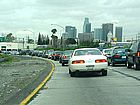
People have known for decades that the big auto makers could have embarked on meaningful efforts to curtail the use of fossil fuels, even more, that they may have actually squashed several entrepreneurial attempts at new technologies by buying them out and storing the ideas in their vaults.
No, it's no surprise that after a good shake-up in the stock market, coincident with the environmental conference and all the media hype about global warming that one of the big guys would leap at the opportunity.
The squeaky wheel gets the grease, and if the timing is right, let's be sure to look like a hero. Well you're not fooling us!

People have known for decades that the big auto makers could have embarked on meaningful efforts to curtail the use of fossil fuels, even more, that they may have actually squashed several entrepreneurial attempts at new technologies by buying them out and storing the ideas in their vaults.
No, it's no surprise that after a good shake-up in the stock market, coincident with the environmental conference and all the media hype about global warming that one of the big guys would leap at the opportunity.
The squeaky wheel gets the grease, and if the timing is right, let's be sure to look like a hero. Well you're not fooling us!
Subscribe to:
Posts (Atom)